Who We Are
An Institution Built on Indigenous Ecological Knowledge
Rather than treating indigenous knowledge as something to preserve in museums or textbooks, we recognise it as a living body of knowledge that continues to offer valuable insights into ecology, sustainability, architecture, design, and community life.
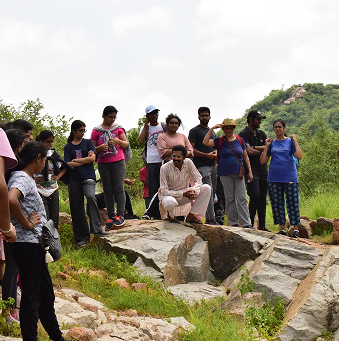
FIEK is a multidisciplinary knowledge institution that brings together experiential education, indigenous ecological knowledge, research, and regenerative practice. Through curriculum-linked programmes, research collaborations, knowledge documentation, and partnerships with traditional practitioners, we translate living knowledge systems into meaningful educational experiences for schools, universities, and organisations.
We do not teach sustainability as an abstract concept. We practise it, document it, and integrate it into contemporary education.
Our public name, Pillakalvalu, meaning "tiny streams" in Telugu, reflects our philosophy: small, consistent efforts rooted in tradition can come together to create lasting change.
Our Story
From Field Practice to Educational Innovation
Pillakaluvalu means "tiny streams" in Telugu the small rivulets that emerge from a hillside before joining to form a river. FIEK began as a collective of practitioners, farmers, architects, anthropologists, and filmmakers who shared a single conviction: that India's most sophisticated ecological knowledge lives not in textbooks, but in the hands of artisans, farmers, and forest communities.
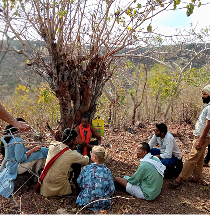
Guided by the vision and teachings of our gurus, Shri Ravindra Sharma and Shri Biju Bhaskar, we set out to learn directly from these living knowledge traditions through observation, documentation, and practice.
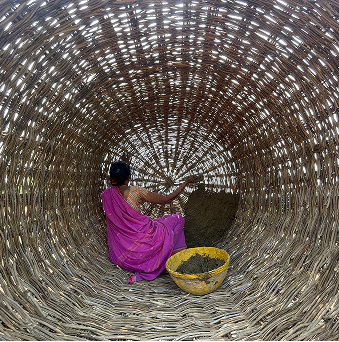
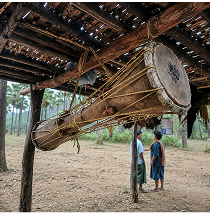
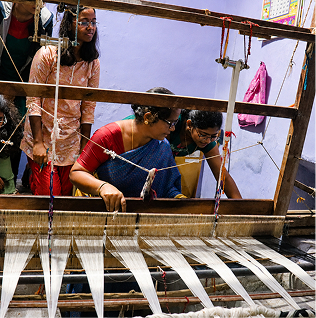
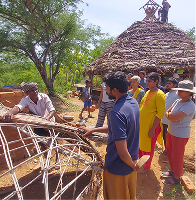
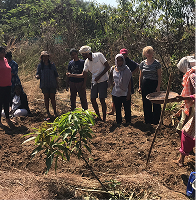
Over three years, this conviction became a pedagogical framework. We documented Chenchu shelters in the Nallamala forests, Konda Reddi farming systems along the Godavari, Ikkat weaving homes in Telangana, and Gummi seed banks in Nagarjuna Sagar. We restored degraded land into productive farms. We built community spaces with earth and bamboo. And we distilled everything we learned into a methodology that schools could adopt without replacing their existing curriculum.
Today, FIEK operates as a bridge: between traditional knowledge and contemporary education, between field practice and classroom learning, between communities and institutions.
Knowledge is most meaningful when it is experienced, shared and continually renewed.
Mission, Vision & Approach
Our Mission
- Reconnect India's cultural and ecological heritage through hands-on, experience-based learning rooted in traditional practice.
- Work directly with schools, colleges and grassroots organisations to bring that heritage into contemporary education.
- Document and sustain the knowledge held by farmers, artisans and elders before it disappears.
Our Vision
- An education system where sustainability, heritage and ecological literacy sit inside the curriculum, not beside it.
- A generation of students who understand land, materials and food systems as interconnected, not as separate subjects.
- A body of documented indigenous knowledge that stays accessible to the communities and institutions that need it.
Our Approach
- We design and deliver experiential learning programmes directly with schools, built around a documented pedagogical framework.
- We design and restore land our own and our partners' using regenerative agriculture and permaculture principles.
- We document indigenous architecture, farming and craft through direct fieldwork with the communities who practise it.
- We build academic and research partnerships including with IIT Hyderabad to give this work institutional rigour.
A Knowledge Ecosystem Where Education, Research and Practice Reinforce One Another
At FIEK, our work does not exist in isolated departments or independent projects. Every programme, research initiative and field practice contributes to a shared knowledge ecosystem where learning, documentation and implementation continually inform one another. This interconnected approach allows us to create educational experiences that are academically rigorous, culturally grounded and informed by real-world practice.